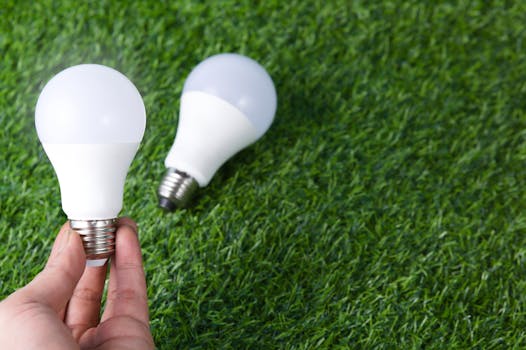
LED lighting has rapidly become the gold standard in homes, businesses, and public spaces worldwide. Yet, many people use LEDs daily without truly understanding the remarkable science behind their bright, efficient glow. What makes LEDs so different from traditional bulbs? How do they work at the microscopic level, and why are they so much more energy-efficient? In this article, we’ll illuminate the fascinating science behind LED lighting—exploring the key principles, breakthrough materials, and ongoing innovations that power the LED revolution.
The Basic Physics of LED Light Production
To understand LED lighting, we must first grasp the fundamentals of how LEDs (Light Emitting Diodes) produce light. Unlike incandescent or fluorescent bulbs, which create light through heating filaments or energizing gases, LEDs rely on a solid-state mechanism.
At the heart of every LED is a tiny semiconductor chip, typically made from materials like gallium nitride (GaN). This chip is constructed with two layers: one with an excess of electrons (n-type) and one with a deficit (p-type). When an electrical current passes through, electrons move from the n-type region to fill holes in the p-type region. This movement releases energy in the form of photons—particles of light—in a process known as electroluminescence.
The color (wavelength) of the light produced depends on the materials used in the semiconductor and their energy band gap. For instance, gallium nitride is used for blue and white LEDs, while aluminum gallium indium phosphide is used for red and orange LEDs.
Key Fact: The first practical visible-spectrum LED was invented in 1962 by Nick Holonyak Jr., emitting red light. It wasn’t until the 1990s that blue LEDs became feasible, which enabled the creation of white light LEDs.
Materials Science: The Key to LED Efficiency
The efficiency and color of LED lighting depend heavily on the materials used in the semiconductor chip. Semiconductors must be carefully engineered to have the right band gap for the desired color and efficiency.
Early LEDs were limited to red, green, and yellow colors because of available semiconductor materials. The breakthrough came with the development of gallium nitride (GaN) and related compounds, which made blue LEDs possible. This, paired with phosphor coatings, allowed the creation of white LEDs—now ubiquitous in lighting applications.
Phosphor-converted LEDs use a blue or near-UV LED covered with a yellow or multi-color phosphor. The phosphor absorbs some of the blue light and re-emits it at longer wavelengths, blending to produce a spectrum that appears white to the human eye.
A 2022 report from the U.S. Department of Energy found that modern white LEDs can reach luminous efficacies of up to 220 lumens per watt—a massive leap from incandescent bulbs, which typically offer only 10-17 lumens per watt.
Comparing LED Lighting to Other Technologies
What truly sets LEDs apart? To highlight the science-driven advantages of LEDs, let’s compare them to traditional lighting technologies.
| Technology | Light Production Method | Typical Efficiency (lumens/watt) | Average Lifespan (hours) | Key Materials |
|---|---|---|---|---|
| Incandescent | Heated tungsten filament (incandescence) | 10–17 | 1,000 | Tungsten, glass |
| Fluorescent | Excited mercury vapor, phosphor coating | 35–100 | 7,000–15,000 | Mercury, phosphor, glass |
| LED | Electroluminescence in semiconductor | 80–220 | 25,000–100,000 | Gallium nitride, phosphor, plastic/glass |
As the table shows, LEDs outclass both incandescent and fluorescent bulbs in efficiency and longevity. Their solid-state nature means there are no fragile filaments or hazardous gases—just robust, energy-efficient technology.
The Role of Heat Management in LED Design
While LEDs are far more efficient than older lighting technologies, not all the electrical energy is converted to light; some is inevitably lost as heat. However, unlike incandescent bulbs—where around 90% of the energy becomes heat—LEDs lose only about 20-30% as heat.
This heat, if not properly managed, can degrade the semiconductor materials and shorten the LED’s lifespan. That’s why advanced thermal management is a critical part of LED design. Heatsinks, typically made of aluminum, are incorporated into LED bulbs and fixtures to draw heat away from the chip and dissipate it into the surrounding air.
Fact: According to a 2023 study by the International Journal of Heat and Mass Transfer, well-designed heat sinks can lower LED junction temperatures by 20-40%, significantly extending operational life.
Manufacturers also design LED drivers—electronic circuits that regulate current and voltage—to optimize performance and prevent overheating. This combination of smart electronics and materials engineering is why high-quality LEDs can last for decades under normal use.
Color Quality and the Science of White Light
One of the most fascinating aspects of LED science is how engineers achieve high-quality, natural-looking white light. White LEDs are not fundamentally different from colored LEDs; instead, they use innovative methods to blend wavelengths.
The most common approach is the phosphor-converted white LED, where a blue or UV chip excites a yellowish phosphor layer, creating a spectrum that appears white. More advanced LEDs use multiple colored chips (red, green, blue) to mix light directly, enabling precise control over color temperature and rendering.
The Color Rendering Index (CRI) is used to measure how accurately a light source displays colors compared to natural sunlight. High-quality LEDs regularly achieve CRI values above 80, with the best products exceeding 90—providing vibrant, true-to-life color in homes, offices, museums, and beyond.
In 2014, the Nobel Prize in Physics was awarded to Isamu Akasaki, Hiroshi Amano, and Shuji Nakamura for their pioneering work on blue LEDs—a discovery that made efficient, high-quality white LED lighting possible.
Emerging Innovations: The Future of LED Science
LED technology continues to evolve rapidly, with cutting-edge research focusing on even greater efficiency, tunable color, and new applications.
Some of the latest breakthroughs include:
- Quantum dot LEDs (QLEDs): These use nanocrystal semiconductors to produce highly pure and tunable colors, already making waves in the display industry. - Organic LEDs (OLEDs): Made from carbon-based molecules, OLEDs can be printed on flexible substrates, paving the way for bendable screens and novel lighting designs. - UV and infrared LEDs: Extending the wavelengths available, these LEDs are revolutionizing medical, horticultural, and industrial applications. - Smart and connected LEDs: Integrated with sensors and wireless controls, they enable dynamic lighting that adjusts to occupancy, daylight, or user preferences.According to market research firm Statista, the global LED lighting market is projected to reach $107 billion by 2026, driven by ongoing innovation and increasing demand for energy-efficient solutions.
Bringing the Science of LED Lighting Home
The science behind LED lighting is a testament to decades of discovery and engineering ingenuity. From the atomic structure of semiconductors to the design of heat sinks and drivers, each LED bulb represents a symphony of physics, materials science, and electronics. This sophisticated technology delivers not only lower energy bills and longer lifespans, but also unprecedented control over light quality and color.
Whether you’re replacing a desk lamp or lighting up a stadium, understanding the science behind LEDs helps you appreciate why they’re the smart choice for the future. As researchers continue to push the boundaries, we can expect LED lighting to become even more efficient, versatile, and inspiring in the years ahead.