LED Lighting vs. Traditional Bulbs: What You Need to Know
The world of lighting has changed dramatically over the past two decades. Once dominated by incandescent and fluorescent bulbs, today’s homes, offices, and public spaces are rapidly making the switch to LED lighting. But beyond the marketing buzz and energy-saving promises, how do LED lights really stack up against traditional bulbs? If you’re considering upgrading your lighting or simply curious about the differences, this in-depth comparison will illuminate the facts, figures, and practical implications you should know.
The Fundamentals: How LED and Traditional Bulbs Work
To understand why LED lighting is considered a technological leap, it helps to know how each bulb actually produces light.
Incandescent bulbs, invented in the late 19th century, generate light by heating a tungsten filament until it glows. This process is inefficient—about 90% of the energy is lost as heat, and only 10% becomes visible light.
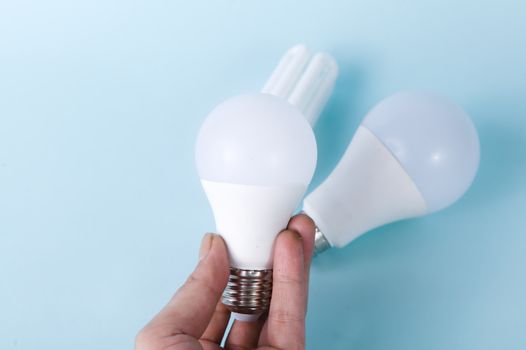
Fluorescent bulbs, including compact fluorescent lamps (CFLs), work by passing electric current through a gas, producing ultraviolet light. This UV light excites a phosphor coating inside the tube, which then emits visible light. While more efficient than incandescent bulbs, fluorescent options still have drawbacks, such as containing small amounts of toxic mercury.
LEDs—short for Light Emitting Diodes—operate quite differently. They use a semiconductor to convert electricity directly into light, resulting in far less wasted energy as heat. This fundamental difference is the key to their superior efficiency.
Energy Efficiency: Numbers That Matter
One of the biggest draws of LED lighting is energy efficiency. But how much more efficient are LEDs compared to their traditional counterparts?
Let’s break down the numbers:
- Incandescent bulbs typically convert only 10% of their energy into visible light, with the rest wasted as heat. - Compact fluorescent lamps (CFLs) are about 4 times more efficient than incandescents, but still lose significant energy as heat and UV. - LEDs are up to 80% more efficient than incandescent bulbs. For example, to produce about 800 lumens (comparable to a 60-watt incandescent bulb): - Incandescent: uses 60 watts - CFL: uses 13-15 watts - LED: uses only 8-10 wattsAccording to the U.S. Department of Energy, widespread use of LED lighting could save the equivalent annual electricity output of 44 large power plants (about 348 terawatt-hours) by 2027, saving more than $30 billion at today’s electricity prices.
Lifespan and Durability: How Long Do the Bulbs Last?
A bulb’s lifespan isn’t just about convenience—replacing bulbs less often means less waste and lower costs over time.
- Incandescent bulbs last about 1,000 hours on average. - CFLs typically last between 8,000 and 10,000 hours. - LEDs, however, can last anywhere from 15,000 to 50,000 hours, depending on quality and usage.To put this into perspective: in a residential setting where a light is used for 3 hours a day, an incandescent bulb would need to be replaced roughly once a year, a CFL every 7-9 years, and an LED could potentially last up to 45 years.
LEDs are also more robust. With no fragile filament or glass tube, they’re less prone to breakage from vibration or impact, making them ideal for outdoor, industrial, or high-traffic environments.
Quality of Light: Brightness, Color, and Comfort
The quality of light isn’t just about brightness—it’s also about color accuracy, warmth, and how it makes spaces feel.
- Incandescent bulbs produce a warm, yellowish light (around 2700K on the color temperature scale), favored for its cozy ambiance. - CFLs can vary but sometimes produce a harsher, cooler light and may flicker or take time to reach full brightness. - LEDs offer the most flexibility, available in a wide range of color temperatures (from warm 2700K to daylight 6500K), and many are dimmable and instantly reach full brightness.Color Rendering Index (CRI) is another important metric. CRI measures a light source’s ability to reveal true colors compared to natural sunlight (which has a CRI of 100).
- Incandescent bulbs: CRI of about 100 (excellent color rendering) - CFLs: CRI typically 80-85 - LEDs: Modern LEDs often achieve CRI ratings of 80-98, with high-CRI products available for color-critical tasks.Poor color rendering can make food appear unappetizing, distort makeup colors, or make reading more difficult. For most home applications, a CRI of 80 or above is recommended.
Environmental Impact: Sustainability Beyond Savings
Lighting choices have a broader environmental impact than many realize. Traditional bulbs are not only less energy-efficient, but they also contribute more waste and pollution.
- Incandescent bulbs are made from glass and metal, and while they don’t contain hazardous substances, their short life means more frequent disposal. - CFLs contain mercury—a potent neurotoxin—requiring special disposal and recycling to prevent environmental contamination. - LEDs contain no mercury and are fully recyclable. Their long lifespan also means fewer resources used in manufacturing, packaging, and transportation.According to the Environmental Protection Agency, if every American household replaced just one incandescent bulb with an ENERGY STAR-rated LED, it would prevent greenhouse gas emissions equivalent to those from 800,000 cars annually.
LEDs also emit less heat, reducing air conditioning costs and lowering the risk of fire in certain applications. This is particularly important in commercial and retail settings with extensive lighting needs.
Cost Comparison: Upfront Price vs. Long-Term Value
A common hesitation about LEDs is the higher initial cost. But looking at total ownership costs—including energy use and replacement frequency—paints a different picture.
Let’s compare the average costs for a single 800-lumen bulb (used 3 hours per day, with electricity at $0.13/kWh) over a 10-year period:
| Bulb Type | Purchase Price | Bulbs Needed (10 yrs) | Total Bulb Cost | Electricity Cost | Total 10-Year Cost |
|---|---|---|---|---|---|
| Incandescent | $1 | 10 | $10 | $28.47 | $38.47 |
| CFL | $2 | 2 | $4 | $6.17 | $10.17 |
| LED | $4 | 1 | $4 | $4.38 | $8.38 |
As the table shows, despite a higher upfront cost, LEDs are the clear winner in long-term savings. Over 10 years, a single LED bulb saves about $30 compared to an incandescent, and about $2 compared to a CFL. Multiply this by every bulb in your home, and the savings become significant.
Other Considerations: Safety, Compatibility, and Special Features
Beyond the basics, there are additional factors to consider when choosing between LED and traditional bulbs:
- Dimming: Not all LEDs are compatible with existing dimmer switches, but many manufacturers now offer dimmable options designed to work with standard dimmers. - Instant On: LEDs reach full brightness instantly, while CFLs may take several seconds to warm up. - Directional Lighting: LEDs emit light in a specific direction, making them more efficient for recessed and task lighting. Incandescent and CFLs emit light in all directions, sometimes requiring reflectors. - Safety: LEDs operate at much cooler temperatures, reducing the risk of burns and fire hazards. - Smart Features: Many modern LEDs offer smart capabilities, including remote control, color changing, and integration with home automation systems—features not available with traditional bulbs.Final Thoughts: Making the Right Choice for Your Lighting Needs
The shift from incandescent and CFL bulbs to LED lighting is more than just a trend—it’s a smart, sustainable decision that benefits your wallet, your home, and the planet. LEDs outperform traditional bulbs in nearly every category: energy efficiency, lifespan, light quality, safety, and long-term cost. With more options than ever, including high-CRI, dimmable, and smart-enabled LEDs, it’s easy to find a solution tailored to your needs.
While the upfront cost may be higher, the investment pays for itself in energy savings and reduced maintenance. For homeowners, businesses, and anyone looking to reduce their environmental impact, LEDs are the clear choice.