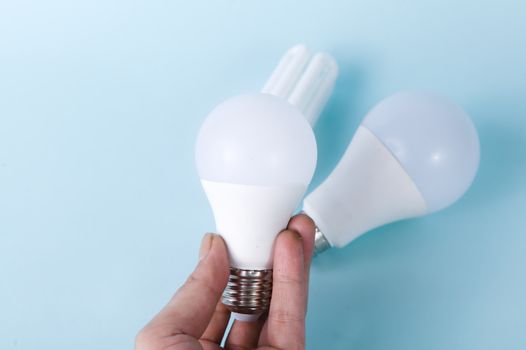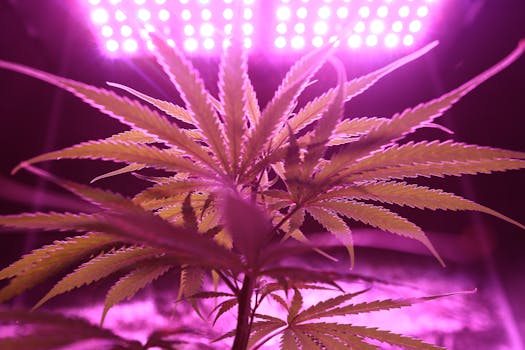
The world of indoor cultivation is experiencing a revolution, thanks in large part to the emergence of LED lighting. As more growers seek sustainable, energy-efficient solutions, LEDs have become a cornerstone technology for plant health and productivity. But what does the science actually say about how LED lighting affects plant growth? Let’s dive deep into the scientific approaches shaping modern indoor agriculture and explore how LED lighting is transforming the way we grow plants indoors.
The Science of Plant Growth: Why Light Quality Matters
Plants rely on photosynthesis to convert light into the energy they need to grow, flower, and produce fruit. But not all light is created equal. The specific wavelengths of light—measured in nanometers (nm)—play a critical role in regulating plant physiology.
Sunlight contains the full spectrum, but indoor growers must carefully simulate this using artificial lighting. Traditional grow lights like fluorescent, high-pressure sodium (HPS), and metal halide bulbs have long been used, but LEDs offer unprecedented control over light quality.
Scientific studies show that red (around 660 nm) and blue (around 450 nm) wavelengths are most efficiently absorbed by chlorophyll, the pigment responsible for photosynthesis. Blue light encourages strong, healthy vegetative growth, while red light is essential for flowering and fruiting. The ability to fine-tune these wavelengths makes LEDs a powerful tool for mimicking natural sunlight and optimizing plant health.
Customizable Spectra: The LED Advantage for Indoor Cultivation
One of the most significant breakthroughs in LED lighting is the ability to customize light spectra for different plant species and growth stages. Unlike older technologies that emit a fixed spectrum, LEDs can be engineered to emit precise blends of wavelengths.
For example, research from Wageningen University in the Netherlands found that adjusting red-to-blue ratios could increase lettuce yields by up to 30%. Meanwhile, NASA’s Veggie experiments aboard the International Space Station use adjustable LED arrays to maximize growth in microgravity.
LEDs also allow growers to introduce other wavelengths—like far-red (700–750 nm) or green (500–600 nm)—to influence specific plant responses such as stem elongation, leaf expansion, or photoperiodic flowering. This precision enables scientific approaches like "light recipes," where LED lighting is tailored to the needs of each crop, maximizing productivity and nutritional quality.
Energy Efficiency and Environmental Impact: LEDs vs. Traditional Lighting
Energy consumption is a critical consideration in indoor cultivation, especially for large-scale operations. LEDs are celebrated for their efficiency, converting up to 50% of energy into usable light, compared to just 20–30% for traditional high-intensity discharge (HID) lamps.
This efficiency not only slashes electricity bills but also reduces excess heat. Lower heat output means less reliance on air conditioning and ventilation, further minimizing the environmental footprint. According to the U.S. Department of Energy, switching to LEDs can reduce energy use in indoor agriculture by up to 40%.
The table below highlights a comparison between common grow light technologies:
| Lighting Type | Typical Lifespan (hours) | Energy Efficiency (lm/W) | Spectrum Control | Heat Output |
|---|---|---|---|---|
| LED | 50,000+ | 80-120 | Customizable | Low |
| HPS | 10,000-24,000 | 70-100 | Limited | High |
| Fluorescent | 7,000-15,000 | 35-100 | Limited | Moderate |
| Metal Halide | 6,000-15,000 | 65-115 | Limited | High |
Plant Morphology and Physiology: How LED Spectra Influence Health
Recent advances in plant science reveal that the color, intensity, and duration of light all impact plant morphology—the shape and structure of plants—as well as physiological processes like photosynthesis and transpiration.
For example: - Blue light promotes compact, sturdy growth and enhances the production of secondary metabolites, such as antioxidants. - Red light triggers flowering and fruit development, making it essential for crops like tomatoes, strawberries, and cannabis. - Far-red light can stretch plants, which is sometimes useful for ornamentals or to allow light to penetrate dense canopies.A 2021 study in the journal "Frontiers in Plant Science" demonstrated that basil grown under high blue-to-red ratios had higher concentrations of beneficial phenolic compounds and improved leaf color. Another experiment at Purdue University found that lettuce plants grown under LED lights developed larger leaves and higher vitamin C content compared to those grown under traditional fluorescent lamps.
LEDs also enable “photoperiod manipulation,” allowing growers to control when plants flower by simulating day and night cycles. This is especially important for short-day or long-day crops, helping to increase yields and synchronize harvests.
Scientific Approaches: Data-Driven Cultivation with LEDs
Modern indoor cultivation is increasingly data-driven. Growers use sensors and software to monitor light levels, temperature, humidity, and CO2—optimizing every aspect of the growing environment. LEDs are central to this approach because they can be networked and programmed with precision.
Companies like Signify (Philips Lighting) and Fluence Bioengineering offer LED systems integrated with data analytics, enabling growers to tweak light spectra and intensity in real time. This technology supports “dynamic lighting,” where the spectrum and intensity change throughout the day or growth cycle to mimic sunrise, midday, and sunset.
Researchers at the University of Arizona used such LED systems to grow tomatoes indoors, achieving yields of over 50 kilograms per square meter per year—more than double the yield of conventional greenhouses. By leveraging machine learning and sensor feedback, these data-driven approaches maximize both plant health and resource efficiency.
Challenges and Future Directions in LED-Based Indoor Cultivation
While LED lighting offers many advantages, it is not without challenges. Initial costs for high-quality LED systems can be higher than traditional lights, though these are offset over time by energy savings and longer lifespans.
Another challenge is the need for ongoing research. Not all plant species respond identically to specific light spectra, and optimal “light recipes” for many crops are still being developed. As the field evolves, collaborations between horticultural scientists, engineers, and growers are crucial.
Looking ahead, emerging trends include: - $1 New LEDs can emit ultraviolet (UV) and far-red wavelengths, which influence plant defense mechanisms and growth, respectively. - $1 LEDs’ low heat output makes them ideal for vertical farms, where multiple layers of crops are grown in close proximity. - $1 Smart control systems will continue to advance, enabling fully automated indoor farms with minimal human intervention.With the global indoor farming market projected to surpass $24 billion by 2026, according to MarketsandMarkets, the role of LED technology in sustainable agriculture is only set to grow.
Final Insights: LED Lighting’s Transformative Role in Plant Health
The integration of LED lighting into indoor cultivation is ushering in a new era of precision agriculture. By offering customizable spectra, unmatched energy efficiency, and the ability to support data-driven growing strategies, LEDs are helping growers produce healthier, more productive plants year-round.
Scientific research continues to unlock the full potential of LEDs, revealing how specific light wavelengths and patterns can enhance plant morphology, boost nutritional value, and reduce resource consumption. While challenges remain, the future for LED-powered indoor agriculture is bright—and the health of both plants and our planet will benefit.