Creating a dedicated home gym is an investment in your health, motivation, and daily well-being. But while you might focus on choosing the right equipment or flooring, one often overlooked factor can make or break your workout experience: lighting. The kind of lighting you install directly affects your mood, energy, performance, and even safety during training. LED lighting, with its versatility and efficiency, has become the go-to solution for home gym illumination. But how do you choose the best LED lighting for your fitness space? This detailed guide will walk you through the crucial factors, from color temperature to installation options, ensuring your home gym becomes a space you look forward to using every day.
The Impact of Lighting on Workout Performance and Safety
Lighting in a home gym is more than just a practical necessity. Scientific studies have shown that the quality, intensity, and color of light can significantly influence physical performance, mental focus, and overall workout satisfaction. For instance, a 2020 study by the Journal of Environmental Psychology found that participants in well-lit environments demonstrated a 21% improvement in exercise performance compared to those in poorly lit spaces.
Proper lighting also plays a key role in safety. Shadows or dim spots can obscure hazards such as free weights or uneven flooring, increasing the risk of injury. Moreover, lighting that mimics natural daylight can help regulate circadian rhythms, boosting alertness and motivation during early morning or evening workouts.
Choosing LED lighting for your home gym means you can tailor the lighting conditions to your exact needs. LEDs are available in a wide range of color temperatures and brightness levels, and with smart controls, you can adjust your environment for cardio, yoga, strength training, or high-intensity interval training (HIIT) with a simple tap.
Understanding LED Specifications: Brightness, Color Temperature, and CRI
When shopping for LED lighting, three main specifications will shape your gym experience: brightness (lumens), color temperature (Kelvin), and color rendering index (CRI).
Brightness (Lumens): For most home gyms, experts recommend achieving an illumination level of 300–400 lux (lumens per square meter) across the workout area. To put this in perspective, a standard 100-square-foot (9.3 m²) gym would need roughly 3,000–4,000 lumens for even, effective lighting. Adjustable brightness is ideal, allowing you to switch between high intensity for weightlifting and softer light for stretching or cool-down.
Color Temperature (Kelvin): Light color affects mood and performance. LEDs are available in a spectrum from warm (2,700–3,000K) to neutral (4,000–4,500K) to cool daylight (5,000–6,500K). Cooler temperatures (5,000K+) promote alertness and energy—perfect for fast-paced workouts—while neutral white (around 4,000K) offers a softer, more relaxing atmosphere for yoga or pilates.
Color Rendering Index (CRI): CRI measures how accurately light displays colors compared to natural sunlight, with 100 being perfect. For most gyms, a CRI above 80 is sufficient, but for activities where color accuracy matters (like dance or video recording), aim for CRI 90+.
| Specification | Recommended Value for Home Gyms | Effect/Benefit |
|---|---|---|
| Brightness (Lumens) | 3000–4000 lumens per 100 sq ft | Prevents eye strain, enhances visibility, improves safety |
| Color Temperature (Kelvin) | 4000–6000K | Boosts alertness, matches daylight, supports different workouts |
| Color Rendering Index (CRI) | 80–90+ | Accurate color perception, essential for video or dance |
Types of LED Fixtures for Home Gyms: Pros and Cons
The right LED fixture can transform the look and function of your home gym. Here are the most popular options, along with their strengths and weaknesses:
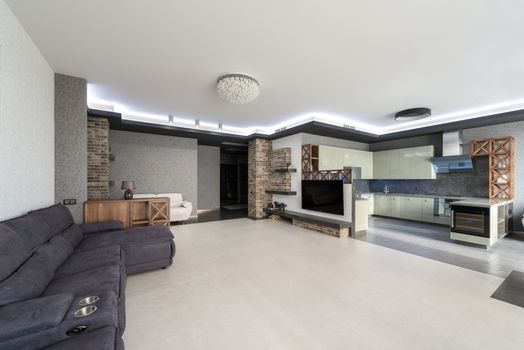
Ceiling-Mounted LED Panels: These provide broad, even illumination—ideal for larger gyms or multipurpose spaces. They’re sleek, modern, and often compatible with dimmers or smart controls. However, installation may require professional help.
LED Downlights/Recessed Lighting: Perfect for low ceilings or a minimalist look, recessed LEDs create a clean environment with customizable coverage. However, they can cast shadows if not spaced correctly, so a lighting plan is essential.
LED Strip Lights: Flexible and easy to install, LED strips can highlight mirrors, equipment, or flooring edges, improving both safety and ambiance. Look for waterproof or shatterproof options for durability. Their main drawback is lower overall brightness compared to panels or downlights.
Track Lighting: Adjustable track lights let you direct beams where you need them—great for highlighting specific zones or equipment. On the downside, installation can be more complex, and exposed bulbs may cause glare if not positioned thoughtfully.
Floor and Wall-Mounted Fixtures: Supplementary wall sconces or floor lamps can add warmth and depth, but should be used with care to avoid creating uneven light or obstacles.
Smart Features and Controls: Personalizing Your Gym Experience
Modern LED lighting offers far more than just an on/off switch. Smart LED systems, which grew by over 20% in global adoption from 2021 to 2023 (according to Statista), allow you to fine-tune your gym’s lighting with unprecedented ease. Here’s how smart controls can enhance your training:
Adjustable Color and Brightness: Change color temperature and intensity with a smartphone app or voice assistant. For example, you might prefer a vibrant 6,000K for HIIT, and a soft 3,500K for meditation or stretching.
Programmable Scenes: Set lighting “scenes” for different workouts—one tap to switch from cardio to cool-down, or to energize the space for early-morning training.
Motion Sensors: Save energy and increase convenience by having lights automatically turn on when you enter, and off when you leave.
Integration with Fitness Tech: Some systems sync lighting with music, heart rate, or workout apps, creating an immersive, motivating environment.
Dimmable Controls: Dimming capability is valuable for evening workouts or warm-ups, helping to avoid harsh light before bedtime, which can interfere with sleep.
Installation and Placement: Maximizing Lighting Coverage
Designing a well-lit home gym isn’t just about the type of fixture—it’s also where and how you install them. Here are key tips for optimal lighting placement:
Even Distribution: Aim for consistent coverage throughout the room, avoiding bright hotspots or dark corners. For example, in a 10’x10’ space, consider two or three evenly spaced ceiling fixtures instead of just one.
Avoid Glare: Position lights so they don’t shine directly into your eyes or create reflections on mirrors. Matte finishes on fixtures can help minimize harsh reflections.
Highlight Key Zones: Use accent lights or LED strips to illuminate functional zones, such as cardio machines, weight benches, or stretching mats.
Consider Ceiling Height: For ceilings under 8 feet, recessed or flush-mount fixtures work best. For higher ceilings, pendant or panel lights can provide broader illumination.
Factor in Natural Light: If your gym has windows, maximize daylight during the day and use LEDs to supplement or balance the light for evening use.
Allow for Upgrades: Choose modular or rail systems if you plan to expand or reconfigure your gym in the future.
Cost, Efficiency, and Long-Term Value of LED Gym Lighting
While the upfront cost of LED fixtures can be higher than traditional bulbs, their long-term value is unmatched. LEDs use up to 75% less energy than incandescent bulbs and last up to 25 times longer. According to the U.S. Department of Energy, the average LED bulb can run for over 25,000 hours—meaning your gym lights could last more than a decade with regular use.
Energy Efficiency: For a 100-square-foot gym, replacing four 60-watt incandescent bulbs (total 240W) with four 12-watt LED bulbs (total 48W) can save up to $60 annually on electricity bills (based on an average rate of $0.15/kWh and 3 hours of use per day).
Minimal Heat Output: LEDs stay cool, preventing unwanted heat buildup—an important factor in small or enclosed gyms.
Low Maintenance: With a lifespan of up to 10–15 years, you’ll spend less time and money replacing bulbs.
Increasing Home Value: A well-designed, energy-efficient home gym can boost property appeal—41% of homebuyers in a 2023 National Association of Home Builders survey cited home fitness spaces as highly desirable.
Final Thoughts: Creating the Perfect LED-Lit Home Gym
Choosing the right LED lighting for your home gym is about more than just brightness—it’s about crafting an environment that motivates, energizes, and supports your fitness journey. By understanding brightness, color temperature, fixture options, and smart controls, you can tailor your gym’s lighting to match your workout style and schedule. Not only will this improve your safety and performance, but it will also make your home gym a space you’re excited to use every day. With the right LEDs, your fitness goals are always in the best possible light.